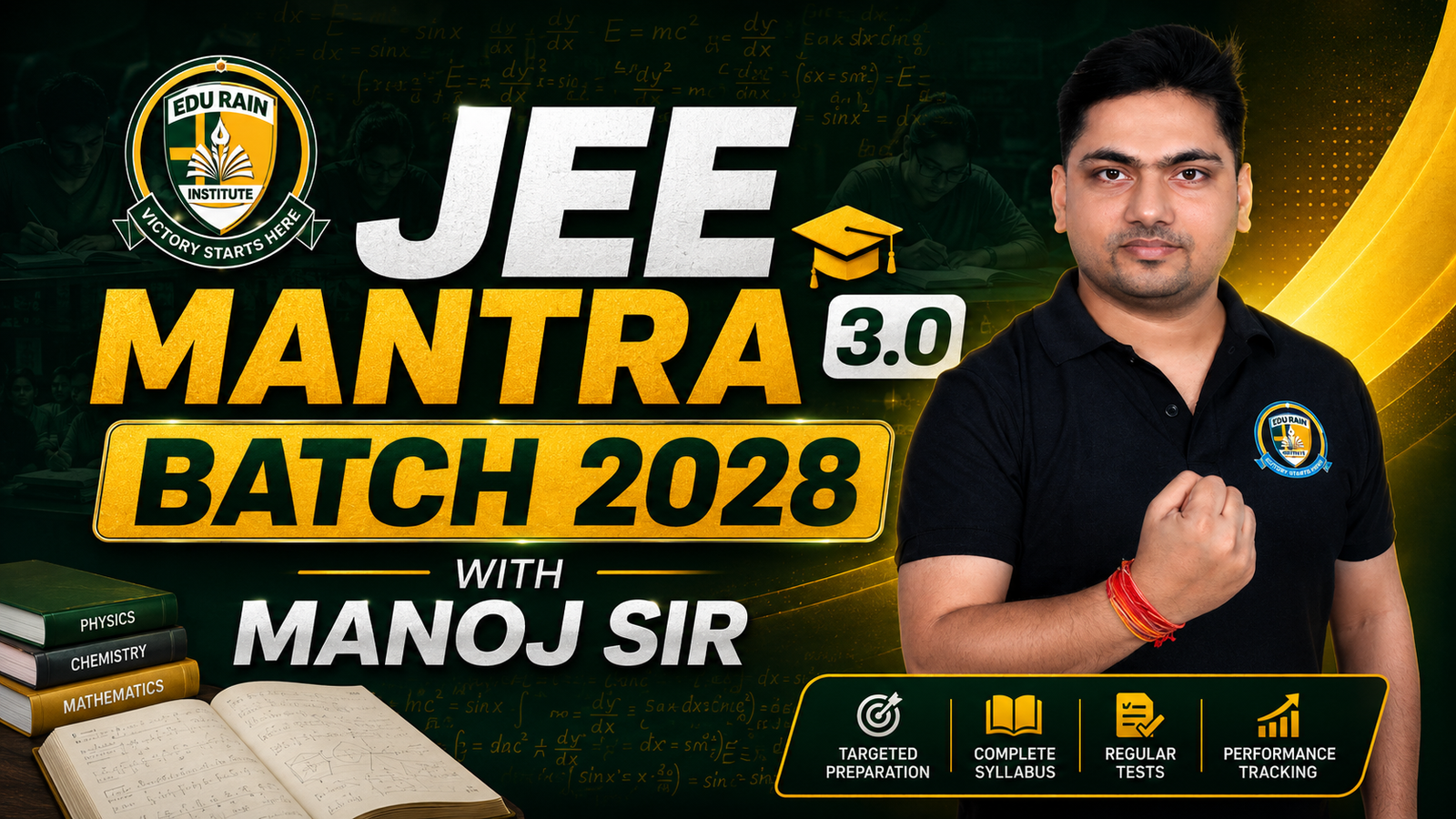
JEE Mantra 3.0 BATCH 2028
This batch is designed to provide complete preparation for JEE Main & Advanced with a strong focus on conceptual learning, regular practice, and expert guidance. Students will strengthen their understanding of Physics, Chemistry, and Mathematics through interactive classes, doubt-solving sessions, mock tests, and continuous performance evaluation. With a structured learning approach and personalized mentorship, the batch helps students improve their speed, accuracy, confidence, and overall exam readiness to achieve their best possible JEE rank.
Category Complete Course
Last Updated 04-07-2026
₹918.00 ₹1020.00
Class 8 Complete Learning Program
Strengthen your child’s learning journey with the Class 8 Complete Learning Program by EduRain Institute.This course is designed to help students build strong fundamentals, improve understanding of core subjects, and develop confidence in academics through interactive and engaging learning methods.
Category Complete Course
Last Updated 07-05-2026
Free
Class 9th Complete Success Program
The program includes live interactive classes, chapter-wise learning, regular tests, doubt-solving sessions, revision classes, and expert guidance from experienced faculty. Students receive complete support in subjects like Mathematics, Science, Social Science, English, and other core subjects through a structured and student-friendly learning approach.
Category Complete Course
Last Updated 07-05-2026
Free
EduRain Class 10 Elite Batch
A complete online coaching program for Class 10 students focused on concept clarity, board exam preparation, regular tests, and academic excellence through expert guidance and interactive learning.
Category Complete Course
Last Updated 07-05-2026
Free